Choosing a shutter finish is one of the most consequential decisions in any modular kitchen project — it decides how the kitchen looks on day one and how it survives the next ten summers. In Delhi NCR, that survival test is a real one: peak-summer temperatures that push past 45°C, months of dust and pollution, monsoon humidity spikes, and kitchens that often sit close to west-facing windows or ventilation gaps near the chimney and hob.
Acrylic and PU (polyurethane) are the two finishes homeowners in the region compare most often, because both deliver a modern, glossy look — but they behave very differently once heat, grease, and daily wear enter the picture. Whether you're finalising modular kitchen designs in Gurgaon, comparing modular kitchen manufacturers in Gurgaon, or exploring a modular kitchen in Delhi, this guide breaks down exactly how each finish performs so you can choose with confidence.
Quick Answer
For most Delhi NCR kitchens — especially those with west or south-facing windows, open-plan layouts near the hob, or heavy daily cooking — PU finish is the more heat- and scratch-resilient choice for high-use shutters, while acrylic wins on sheer mirror-gloss aesthetics and is best suited for low-heat-exposure zones like tall units, wardrobes, and accent shutters. Many homeowners in Delhi NCR actually mix both: PU near the cooking zone, acrylic for showcase areas.
Acrylic vs. PU: Full Comparison Table
|
Parameter |
Acrylic Shutters |
PU (Polyurethane) Shutters |
|
Surface & Look |
High-gloss, mirror-like reflective finish; very vibrant colours |
Available in gloss, satin, and matte; slightly softer sheen than acrylic |
|
Heat Resistance |
Moderate — can warp or dull if placed very close to the hob/chimney over years of Delhi summers |
High — better suited to heat and humidity swings typical of Delhi NCR |
|
Scratch & Impact Resistance |
Prone to fine scratches and swirl marks; shows fingerprints and micro-scuffs easily |
More scratch- and impact-resistant; better hides minor daily wear |
|
Maintenance |
Needs frequent, careful wiping with soft microfiber cloth to avoid dulling the shine; abrasive cleaners cause visible marks |
Easier day-to-day upkeep; tolerates regular kitchen cleaning agents better |
|
Moisture/Humidity Resistance |
Good, provided edge-banding is sealed well |
Good to excellent; PU coating is more forgiving of monsoon humidity |
|
Repair & Touch-up |
Difficult to spot-repair; damage usually means replacing the full shutter |
Easier to sand and re-coat locally in case of chips or dents |
|
Cost (Indian market, approx.) |
Generally higher per sq. ft. than PU |
Slightly more affordable than acrylic, though premium PU can match acrylic pricing |
|
Best Used For |
Showcase units, tall units, low-touch/low-heat areas, statement colour pops |
Base cabinets, hob-adjacent shutters, high-traffic, high-heat zones |
|
Longevity in Delhi NCR Conditions |
7–10 years with careful use and placement away from direct heat |
10–15 years, holds up better to heat cycling and daily handling |
Read more: Acrylic vs. PU Finish: The Definitive Guide for the High-Heat Indian Kitchen
Why Delhi NCR's Climate Changes the Answer
Kitchen finish comparisons written for a generic Indian audience often miss the specifics that matter here:
- Extreme summer heat (April–June): Kitchens with west-facing windows or shutters near the chimney undergo repeated heat cycling. Acrylic sheets are thermoplastic and more sensitive to sustained heat exposure over years, which is why we recommend keeping acrylic away from the immediate hob zone.
- Dust load: Delhi NCR's ambient dust settles into gloss finishes quickly. Acrylic's ultra-reflective surface shows dust and smudges faster than PU's slightly softer sheen, meaning acrylic kitchens need more frequent wiping to stay looking sharp.
- Monsoon humidity swings: Both finishes handle humidity well when the underlying board (BWP plywood or exterior-grade MDF) and edge-banding are done right — but PU's coating tends to be marginally more forgiving if edge-sealing is ever imperfect.
- Hard water residue: Common across NCR households; PU's more matte/satin options tend to hide water-spot marks better than high-gloss acrylic.
Durability, Head-to-Head
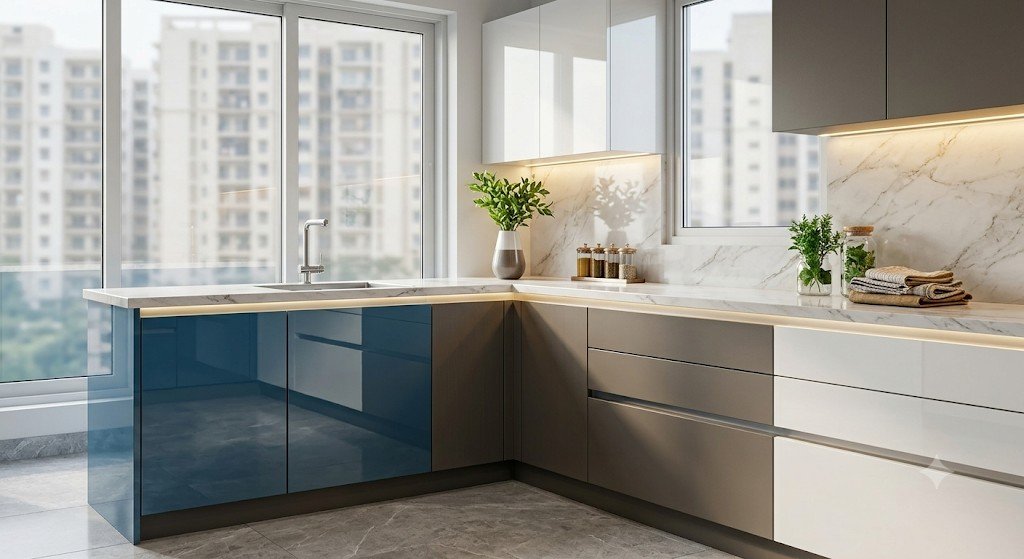
Acrylic is essentially a high-gloss acrylic sheet bonded onto MDF. It delivers unmatched shine and colour depth, but the surface is a thermoplastic laminate — meaning it can soften slightly under prolonged direct heat and is more susceptible to fine scratches from everyday use (utensils, cleaning pads, rings/bangles brushing against the shutter).
PU is a sprayed and cured polyurethane coating applied directly onto the board and then polished. Because it's cured on-site as a coating rather than laminated as a sheet, it bonds more tightly to the substrate, resists heat better, and is noticeably tougher against scratches and daily impact — which is why PU is the standard recommendation for base cabinets and shutters near the cooktop.
Heat Resistance, in Practice
If your kitchen layout places shutters within a couple of feet of the hob or chimney — extremely common in compact Delhi NCR apartments — PU is the safer long-term choice for those specific units. Acrylic can still be used elsewhere in the same kitchen (tall units, loft shutters, an island away from the flame) to get the glossy look without the heat risk.
Maintenance, Day to Day
- Acrylic: Wipe with a dry or slightly damp microfiber cloth; avoid abrasive scrubbers, strong degreasers, and vinegar-based cleaners, all of which can dull the shine over time.
- PU: More tolerant of routine kitchen cleaning agents and daily wear, though a soft cloth is still recommended to preserve the finish's sheen.
Cost Consideration
Acrylic shutters typically carry a higher per-square-foot cost than standard PU, largely due to the sheet material and lamination process. High-end PU finishes (multiple coats, premium polish) can approach acrylic pricing, so it's worth asking for a like-for-like quote — same board grade, same shutter sizes — before comparing prices across finishes.
Planning Your Budget: Finish Cost vs. Overall Kitchen Cost
Shutter finish is only one line item in your total kitchen budget — board material, hardware, shutter count, and layout complexity all move the number too. Before you commit to acrylic, PU, or a mix of both, it's worth running your layout through a modular kitchen cost calculator to see how finish choice affects your overall modular kitchen price. If you're budgeting across Gurgaon specifically, a modular kitchen cost calculator in Gurgaon (or a general interior design cost calculator) can help you compare quotes on a like-for-like basis rather than guessing from a per-shutter rate alone.
Our Recommendation
At Modus Home Decor, we typically guide Delhi NCR homeowners toward a hybrid approach: PU finish on base units, shutters near the hob, and other high-touch, high-heat zones, paired with acrylic on tall units, lofts, or an accent wall of cabinetry where the glossy look gets to shine without the heat and wear exposure. This gives you the mirror finish you want in the kitchen without compromising on the durability the Delhi NCR climate demands.
If you're planning a modular kitchen and want a finish recommendation based on your specific layout, window orientation, and cooking habits, our team of interior designers in Gurgaon can walk you through samples of both finishes in person. As one of the modular kitchen manufacturers in Gurgaon working across Delhi NCR, we've seen firsthand which finishes hold up — and which don't — in real homes over the years.
How to Choose the Right Shutter Finish for Your Kitchen
Picking between acrylic and PU isn't really a catalog decision — it depends on where your hob sits, which way your kitchen window faces, how often you cook, and how the shutters will actually get used every day. Photos and sample boards only tell half the story.
If you'd like a second opinion on your specific layout, get in touch with Modus Home Decor for a consultation. Whether you're comparing modular kitchen designs in Gurgaon or evaluating options for a modular kitchen in Delhi, we'll look at your kitchen's heat exposure and daily use, show you real acrylic and PU samples side by side, and help you land on a finish (or a mix of both) that will still look and perform well years from now — not just on installation day.
Conclusion
There's no single "best" finish for every kitchen in Delhi NCR — there's a best finish for your kitchen's layout, heat exposure, and how hard you use it day to day. Acrylic delivers a showroom-grade gloss that's ideal for tall units, lofts, and accent shutters away from the heat. PU trades a fraction of that shine for meaningfully better heat resistance, scratch resistance, and everyday maintenance, making it the safer choice for base cabinets and any shutter that lives close to the hob.
For most homes in the region — whether you're finalising a modular kitchen in Delhi or working with modular kitchen manufacturers in Gurgaon — the smartest move is the hybrid one: PU where the kitchen works hardest, acrylic where it needs to shine. Getting that split right — along with the board quality and edge-sealing behind it — is what determines whether your kitchen still looks and performs well a decade from now. That's exactly the kind of finish-and-layout decision Modus Home Decor helps homeowners get right from the first consultation.
Frequently Asked Questions
Is PU better than acrylic for Indian kitchens?
PU generally offers better heat resistance, scratch resistance, and easier maintenance, making it a stronger choice for high-use areas. Acrylic offers a superior glossy look and is better suited to low-heat, low-touch shutters.
Which finish lasts longer in Delhi's climate?
PU typically lasts 10–15 years with regular use, while acrylic lasts 7–10 years, particularly if kept away from direct heat sources like the hob or chimney.
Can I mix acrylic and PU in the same kitchen?
Yes — this is a common and practical approach: PU for base cabinets and heat-exposed shutters, acrylic for tall units, lofts, or accent shutters.
Does acrylic yellow over time?
Poor-quality acrylic can dull or yellow with prolonged heat and UV exposure; using a trusted manufacturer and keeping acrylic shutters away from direct sun or hob heat significantly extends its life.
Is PU finish waterproof?
PU-coated shutters, applied over BWP-grade plywood or exterior-grade MDF, offer strong resistance to Delhi's monsoon humidity, though no finish is fully waterproof — proper edge-sealing during installation is essential for both acrylic and PU.
How much does finish choice affect overall modular kitchen cost?
Finish typically accounts for a meaningful share of the total cost, but board grade, hardware, and shutter count matter just as much. Running your layout through a modular kitchen cost calculator is the easiest way to see how switching between acrylic and PU changes your final modular kitchen price.