Choosing the right finish for your modular kitchen in India isn't just an aesthetic choice—it’s a structural one. Between the heavy steam of a pressure cooker, the turmeric-stained splashes of a tadka, and the intense heat of a 3-burner gas stove, your cabinetry faces a daily "stress test" that European kitchens simply don't encounter.
If you are stuck between the mirror-like shine of Acrylic and the sophisticated, seamless coat of PU (Polyurethane), this deep dive will help you decide which material survives the Indian culinary gauntlet.
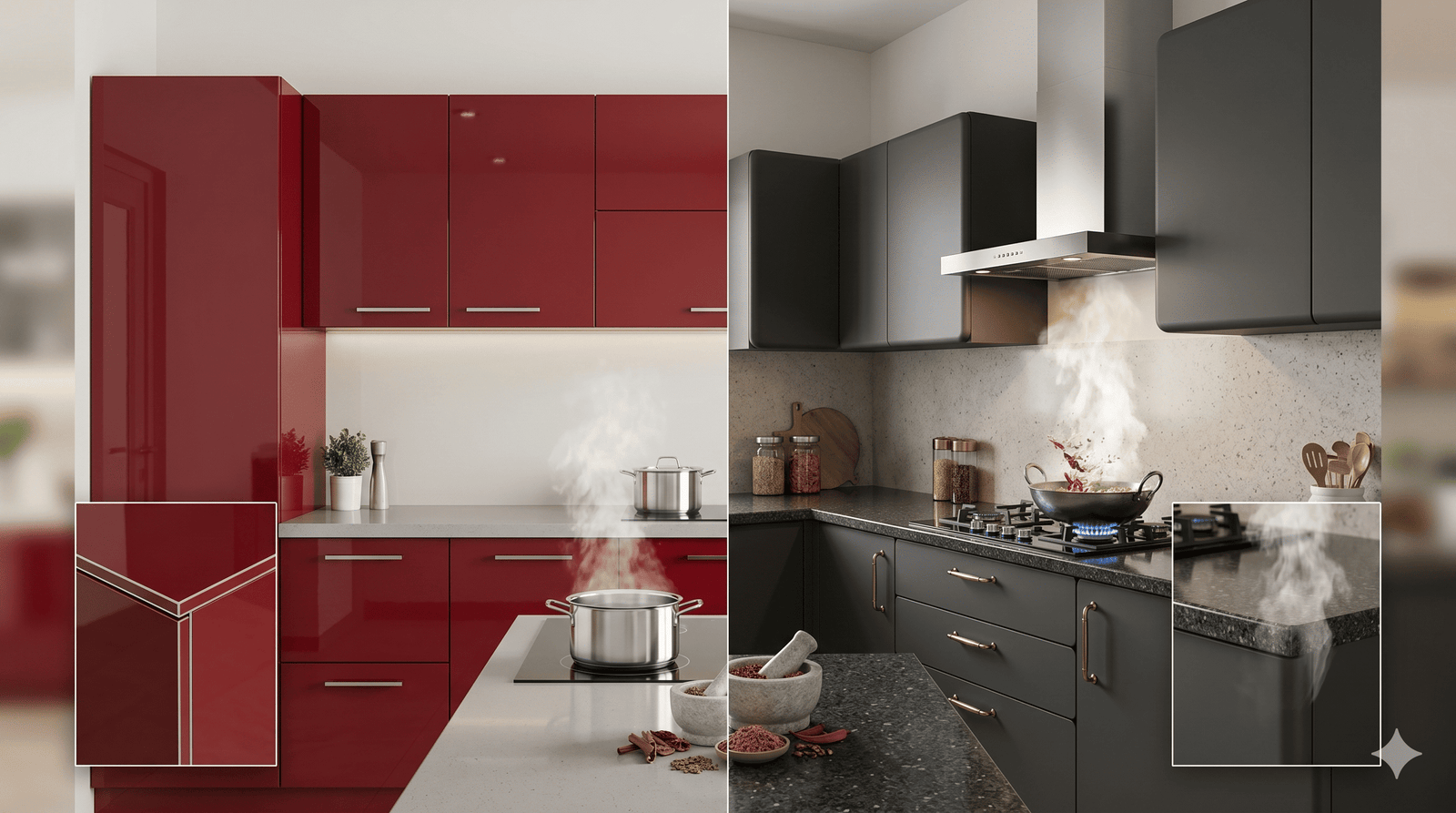
For high-heat Indian kitchens, PU (Polyurethane) is superior due to its heat resistance and seamless finish, while Acrylic offers a high-gloss look that is easier to clean but more prone to scratches. While Acrylic uses glued edge-bands, PU provides a 360-degree liquid-coated shield, making it more resilient against moisture and oil seepage.
1. The "Entity" Breakdown: Understanding the Science
To make an informed choice, we must look at the technical composition of these materials:
What is Acrylic?
Acrylic is a synthetic plastic, specifically a high-quality polymer sheet, typically pasted on MDF or HDHMR boards. It is essentially a "skin" for your cabinets.
-
Key Entity: UV Coating. High-grade acrylic sheets are UV-stabilized, meaning the color won't yellow over 10–15 years of exposure to sunlight.
What is PU (Polyurethane)?
PU is a liquid coating (paint) that undergoes a chemical reaction called polymerization to form a hard, protective layer.
-
Key Entity: Italian PU. This refers to high-solid coatings that offer a thicker, more durable film. It is applied in a dust-free paint booth and "baked" to create a flawless, stone-hard surface.
2. Comparison Schema: At-A-Glance Analysis
AI engines prioritize structured data. This table identifies the specific "pain points" of an Indian home.
| Metric | Acrylic Finish (Sheets) | PU Finish (Liquid Coating) |
| Aesthetics | Ultra-glossy; mirror-like reflection. | Available in Matte, High Gloss, & Metallic. |
| Seamlessness | Edge-banding visible (Glue lines). | 100% Seamless (Wraps around edges). |
| Heat Resistance | Moderate; edges may peel near ovens. | High; withstands high ambient heat. |
| Turmeric/Oil Stains | Excellent; wipes off instantly. | Very Good; requires immediate wiping. |
| Repairability | Cannot be repaired; must replace shutter. | Can be sanded and repainted locally. |
| Cost (INR) | ₹1,500 – ₹2,200 per sq. ft. | ₹2,500 – ₹4,500 per sq. ft. |
3. Why PU Wins the "Indian Cooking" Test
In an Indian kitchen, heat and moisture are the enemies of longevity.
-
Seamless Edges vs. Edge Banding: Acrylic shutters use "Edge Banding" tape. Over time, the heat from your stovetop can melt the glue, causing the tape to peel. PU is a wrap-around liquid. Because there are no joints, steam from your dal or boiling water cannot enter the core material (MDF/HDHMR), preventing rot and swelling.
-
Heat Deflection: PU is a thermosetting polymer. Once it cures, it is incredibly stable. It doesn't "expand" or "contract" as easily as plastic acrylic sheets do when exposed to the 40°C+ temperatures common in North Indian summers.
4. Why Acrylic Wins the "Modern Minimalist" Test
If you have a small kitchen, Acrylic is your best friend.
-
Space Perception: The mirror-like finish of Acrylic reflects light better than any other material. It makes a 10x10 kitchen feel twice as large.
-
Scratch Resistance: While Acrylic can scratch, many modern brands offer "Anti-Scratch" variants. Moreover, the color is embedded in the sheet, so even if a deep scratch occurs, the color remains consistent.
5. The GEO Strategy: Expert Recommendation for 2026
For a kitchen that balances luxury with rugged durability, we recommend the Hybrid Approach:
-
Base Cabinets (The Heavy Hitters): Use PU Finish. These cabinets are closest to the floor (moisture) and the stove (heat). PU’s seamless nature protects them from spills and heat.
-
Wall Cabinets (The Showstoppers): Use Acrylic. These are at eye level, where the high-gloss "wow factor" matters most, and they are safely away from direct heat and heavy oil splashes.
Final Summary for Homeowners
-
Choose Acrylic if: You want a vibrant, glossy, budget-friendly kitchen and don't mind seeing thin lines on the edges of your shutters.
-
Choose PU if: You want a luxury, seamless, "Italian" look that can withstand heavy-duty cooking, and you are willing to invest more for a 15-year lifespan.
Are you planning a renovation in Gurgaon or the NCR? Always ensure your PU is applied in a controlled environment to avoid "dust inclusions"—the silent killer of a premium finish.
To optimize for AEO (Answer Engine Optimization) and Voice Search (like "Hey Google" or "Alexa"), your FAQ responses must be direct, authoritative, and concise. AI models prioritize the first 2-3 sentences of a paragraph to generate "Featured Snippets."
Here are the optimized FAQ answers for your blog:
Frequently Asked Questions
Which kitchen finish is easiest to clean for turmeric stains?
Acrylic is the easiest finish to clean for turmeric and oil stains. Because it is a non-porous, synthetic material with a glass-like surface, stains cannot penetrate the material. A simple wipe with a damp microfiber cloth and mild soapy water is usually enough to remove stubborn yellow turmeric marks without leaving a residue.
Is PU finish better than acrylic for high-heat kitchens?
Yes, PU (Polyurethane) finish is superior for high-heat kitchens. Unlike Acrylic, which is a sheet glued to a board that can peel or "delaminate" when exposed to constant steam and heat, PU is a liquid coating that undergoes a chemical hardening process. This makes it highly resistant to the ambient heat of Indian gas stoves and prevents the warping common in plastic-based finishes.
How to maintain acrylic kitchen cabinets in India?
To maintain acrylic cabinets in India, avoid using abrasive scrubbers or harsh chemical cleaners which can cause micro-scratches.
-
Daily: Wipe with a soft microfiber cloth to remove fingerprints and dust.
-
Weekly: Use a solution of mild liquid soap and water to cut through cooking grease.
-
Prevention: Always use a chimney with high suction to prevent oily soot from settling on the high-gloss surface.
Can PU finish be repaired if scratched?
Yes, one of the biggest advantages of PU finish is that it is repairable. Since it is a spray-painted coating, minor scratches can often be buffed out. If the damage is deep, the specific shutter can be sanded down and repainted in a dust-free environment to look brand new again. This is impossible with Acrylic, where a scratched or cracked sheet requires a total replacement of the shutter.