Quick answer:
The best wardrobe storage ideas combine adjustable shelving, pull-out drawers, dedicated shoe racks, pull-down hanging rails, integrated lighting, and modular accessory organisers — features that let every item have a fixed, visible place instead of getting buried in a single hanging rail. A wardrobe built around these wardrobe organisations cuts daily dressing time, reduces clutter, and keeps clothes in better condition for longer.
A wardrobe isn't just a box with a door and a rail. The difference between a wardrobe that stays tidy for years and one that turns into a dumping ground usually comes down to a handful of design features. Below are ten wardrobe storage ideas worth prioritising, whether you're buying a new wardrobe, exploring fitted wardrobe storage, or upgrading what you already have with better closet storage solutions.
10 Wardrobe Features Worth Prioritising
1. Adjustable Shelving
Fixed shelves force your storage to match the wardrobe's design instead of the other way around. Adjustable shelving lets you reconfigure the space as your wardrobe changes — more shelf space for a growing sweater collection, less for a season with more hanging garments.
Why it helps: You can resize compartments instead of replacing furniture when your storage needs change.
2. Pull-Out Drawers
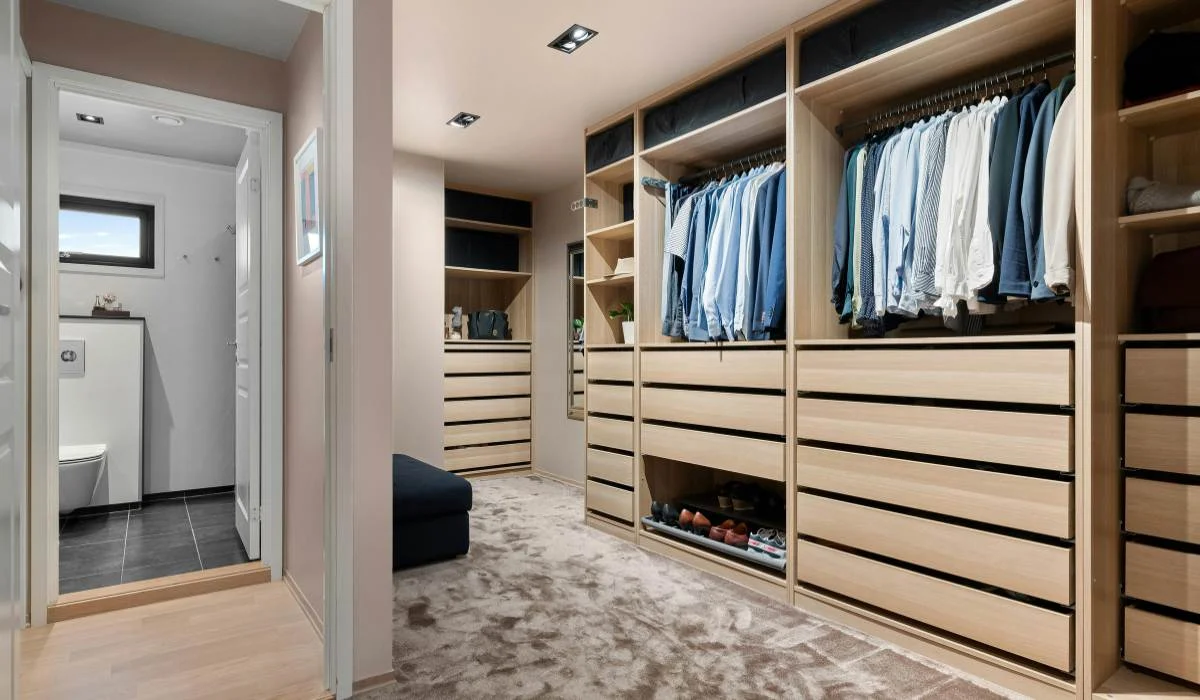
Pull-out drawers built directly into the wardrobe keep folded clothes, underwear, and accessories separate from hanging garments. Unlike stacked shelves, they let you see and reach the back of the storage space without unstacking anything — one of the simplest wardrobe storage solutions for daily use.
Why it helps: Reduces the "dig through a pile" problem that makes folded storage frustrating.
3. Dedicated Shoe Racks or Cubbies
Shoes piled on the wardrobe floor waste vertical space and make the bottom of the wardrobe hard to clean or use. Slanted shoe racks, cubby grids, or pull-out shoe trays keep pairs visible and easy to grab.
Why it helps: Prevents shoes from becoming clutter that spills onto the floor of a room.
4. Pull-Down or Adjustable-Height Hanging Rails
A hanging rail that can be lowered or raised makes the top sections of a tall wardrobe usable without a step stool. This is especially useful in walk-in wardrobe storage with high ceilings or for anyone who wants full use of vertical storage without straining.
Why it helps: Makes every part of the wardrobe height genuinely usable, not just the bottom two-thirds.
5. Double Hanging Rails
Splitting one tall rail into two shorter, stacked rails effectively doubles hanging capacity in the same footprint — ideal for shirts, folded trousers on hangers, and jackets that don't need full-length hanging space. This is one of the most space-efficient wardrobe organisation ideas for small rooms.
Why it helps: Maximises hanging capacity without needing a wider wardrobe.
6. Built-In Lighting
LED strip lighting or motion-sensor lights inside a wardrobe remove the guesswork of choosing clothes in a dim corner or low-light room. This is a small feature that has an outsized effect on daily convenience.
Why it helps: Makes it easier to match colours accurately and find items tucked in corners.
7. Modular Accessory Organisers
Purpose-built wardrobe organisers for ties, belts, jewellery, watches, and scarves stop small items from getting tangled or lost in drawers. Pull-out velvet-lined trays or slotted inserts are common examples.
Why it helps: Keeps small, high-value items protected and quick to find.
8. Sliding or Folding Doors
In smaller rooms, hinged doors that swing outward can eat up usable floor space. Sliding wardrobe doors or folding doors solve this by opening flat against the wardrobe or sliding along a track.
Why it helps: Frees up floor space in front of the wardrobe, especially in compact bedrooms.
9. Ventilation Gaps or Vents
Enclosed wardrobes can trap moisture, leading to musty smells or mildew, especially in humid climates. Small ventilation gaps, slatted back panels, or vent inserts allow airflow around stored clothes — an often-overlooked part of good closet storage solutions.
Why it helps: Protects fabric quality and prevents odour build-up over time.
10. Full-Length or Fold-Out Mirrors
A mirror fitted to the inside of a wardrobe door saves the need for a separate wall-mounted mirror and puts one directly where you're already getting dressed.
Why it helps: Combines two furniture functions into one, saving room space.
How to Choose the Right Combination
Not every wardrobe needs all ten features. A practical approach to wardrobe storage ideas:
- Small bedrooms: prioritise sliding doors, a built-in mirror, and double rails to save floor and hanging space.
- Large wardrobes or walk-in closets: prioritise adjustable shelving, modular accessory organisers, and lighting for the best walk-in wardrobe storage setup.
- Humid climates: prioritise ventilation gaps alongside any other features.
- Shared or family wardrobes: prioritise pull-out drawers and shoe racks to keep multiple people's items separated.
Conclusion
Good wardrobe organisation isn't about owning fewer clothes — it's about giving every item a fixed, dedicated place so nothing gets lost, crushed, or forgotten at the back. The ten features above, from adjustable shelving to ventilation gaps, each solve a specific everyday frustration rather than just adding storage for its own sake. You don't need every feature at once: start with whichever wardrobe storage ideas address your biggest pain point today, whether that's overflowing shoes, tangled accessories, or a wardrobe that's simply too dark to use properly, and build from there.
Frequently Asked Questions
Q1 What is the most important wardrobe storage feature?
Adjustable shelving is generally considered the most important feature because it lets the wardrobe adapt to changing storage needs over time, rather than locking you into one fixed layout.
Q2 How can I make a small wardrobe more organised?
Use double hanging rails, pull-out drawers, and door-mounted organisers to add storage without increasing the wardrobe's footprint. Sliding doors also help by removing the need for door-swing clearance — a key part of smart wardrobe organisation in small spaces.
Q3 Do wardrobes need ventilation?
Yes. Enclosed wardrobes benefit from ventilation gaps or slatted panels to prevent moisture build-up, which can cause musty odours or mildew on stored clothing.
Q4 What's the difference between a fitted wardrobe and a freestanding wardrobe for storage purposes?
Fitted wardrobe storage is built into the room and can be customised with features like adjustable shelving and drawers to fit the exact space. Freestanding wardrobes are more flexible to move but often have fewer built-in organisation options unless purchased with modular inserts.
Q5 How do I stop my wardrobe from becoming cluttered again after organising it?
Give every category of item, shoes, folded clothes, accessories, hanging garments, its own dedicated space so nothing has to compete for the same shelf or rail. Wardrobes stay organised longest when each feature has one clear job.